What Is Your Home Really Worth? Understanding Market Value in a Changing Market
martelu martelu
Wednesday, September 30, 2026
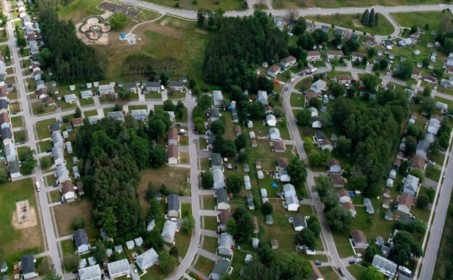
One of the first questions homeowners naturally ask when considering a move is: “What is my home worth?”
It sounds like a simple question, but the answer is rarely based on one number, one neighbouring property or one home currently listed for sale.
For many homeowners, their property represents years of mortgage payments, renovations, improvements, memories and hard work. It is completely understandable to have a value in mind — particularly after the dramatic price increases we experienced during the pandemic years.
But real estate markets change, and understanding the difference between asking price and market value can make a significant difference when it comes time to sell.
Asking Price Is Not the Same as Market Value
A home listed at $900,000 is not necessarily worth $900,000.
It means the seller is asking $900,000.
If that property remains on the market for several months without selling, it may actually be telling us that buyers do not currently see sufficient value at that price.
By comparison, a similar home that recently sold for $850,000 gives us much stronger evidence of what a qualified buyer was prepared to pay under current market conditions.
That does not mean every property should be priced exactly like the last sale. No two homes are identical.
Lot size, location, renovations, condition, square footage, layout, finished basements, garages, views and many other features can affect value. This is why a proper market analysis requires much more than simply looking at a few addresses online.
Why Yesterday's Market May Not Be Today's Market
The pandemic created some extraordinary real estate conditions.
Low interest rates, limited inventory, changing housing needs and intense buyer competition pushed prices upward very quickly in many communities.
Those circumstances were unusual.
Today's buyers may be looking at the same house very differently because they must also consider mortgage payments, property taxes, insurance, utilities, renovation costs and their overall household budget.
A buyer may absolutely love a home — but there is still a limit to what that buyer can comfortably and responsibly afford.
That purchasing power ultimately influences market value.
Your Neighbour's Asking Price Can Be Misleading
This is something I discuss frequently with sellers.
Imagine that a home on your street is listed for $899,900.
Naturally, you may think:
“My home is just as nice — perhaps even nicer — so mine should be worth at least that much.”
Possibly.
But before reaching that conclusion, I would want to know:
A recent sale tells us what the market was actually willing to pay.
Both are important, but they tell us different things.
Pricing Properly Does Not Mean Giving Your Home Away
This is perhaps the most important point.
A realistic pricing discussion should never be about convincing a homeowner to accept less than their property is worth.
Quite the opposite.
The objective is to identify the strongest price the current market can support and then develop a strategy designed to achieve the best possible result.
Sometimes there may be room to test the upper end of a reasonable range. Other times, particularly when there is more inventory competing for the same buyers, positioning the property correctly from the beginning becomes even more important.
The market's response, showings, feedback, competing properties and offers, then provides additional information.
A Market Evaluation Should Tell a Story
When I prepare a Comparative Market Analysis for a homeowner, I do not simply average three neighbouring sales and produce a number.
I look at the complete picture:
What has sold. What has not sold. What buyers can choose from today. How the properties compare. What adjustments are appropriate. How long homes are taking to sell. And where the subject property fits within that competition.
The goal is to establish a realistic range and then determine the pricing and marketing strategy that gives the seller the best opportunity to achieve the highest possible value.
Because ultimately, the best pricing decisions are not based on pessimism or optimism.
They are based on evidence, timing and strategy.
And in a changing market, good information becomes even more valuable.
This article was inspired in part by a recent opinion column by Ontario Realtor Rob Dundas discussing seller expectations and changing market realities. The comments and real estate guidance presented here reflect my own perspective and experience working with buyers and sellers in the Ottawa real estate market.
It sounds like a simple question, but the answer is rarely based on one number, one neighbouring property or one home currently listed for sale.
For many homeowners, their property represents years of mortgage payments, renovations, improvements, memories and hard work. It is completely understandable to have a value in mind — particularly after the dramatic price increases we experienced during the pandemic years.
But real estate markets change, and understanding the difference between asking price and market value can make a significant difference when it comes time to sell.
Asking Price Is Not the Same as Market Value
A home listed at $900,000 is not necessarily worth $900,000.
It means the seller is asking $900,000.
If that property remains on the market for several months without selling, it may actually be telling us that buyers do not currently see sufficient value at that price.
By comparison, a similar home that recently sold for $850,000 gives us much stronger evidence of what a qualified buyer was prepared to pay under current market conditions.
That does not mean every property should be priced exactly like the last sale. No two homes are identical.
Lot size, location, renovations, condition, square footage, layout, finished basements, garages, views and many other features can affect value. This is why a proper market analysis requires much more than simply looking at a few addresses online.
Why Yesterday's Market May Not Be Today's Market
The pandemic created some extraordinary real estate conditions.
Low interest rates, limited inventory, changing housing needs and intense buyer competition pushed prices upward very quickly in many communities.
Those circumstances were unusual.
Today's buyers may be looking at the same house very differently because they must also consider mortgage payments, property taxes, insurance, utilities, renovation costs and their overall household budget.
A buyer may absolutely love a home — but there is still a limit to what that buyer can comfortably and responsibly afford.
That purchasing power ultimately influences market value.
Your Neighbour's Asking Price Can Be Misleading
This is something I discuss frequently with sellers.
Imagine that a home on your street is listed for $899,900.
Naturally, you may think:
“My home is just as nice — perhaps even nicer — so mine should be worth at least that much.”
Possibly.
But before reaching that conclusion, I would want to know:
- Has the neighbour's home actually sold?
- How long has it been on the market?
- Have there been previous price reductions?
- How does its size, lot, condition and location compare with yours?
- What have similar properties actually sold for recently?
A recent sale tells us what the market was actually willing to pay.
Both are important, but they tell us different things.
Pricing Properly Does Not Mean Giving Your Home Away
This is perhaps the most important point.
A realistic pricing discussion should never be about convincing a homeowner to accept less than their property is worth.
Quite the opposite.
The objective is to identify the strongest price the current market can support and then develop a strategy designed to achieve the best possible result.
Sometimes there may be room to test the upper end of a reasonable range. Other times, particularly when there is more inventory competing for the same buyers, positioning the property correctly from the beginning becomes even more important.
The market's response, showings, feedback, competing properties and offers, then provides additional information.
A Market Evaluation Should Tell a Story
When I prepare a Comparative Market Analysis for a homeowner, I do not simply average three neighbouring sales and produce a number.
I look at the complete picture:
What has sold. What has not sold. What buyers can choose from today. How the properties compare. What adjustments are appropriate. How long homes are taking to sell. And where the subject property fits within that competition.
The goal is to establish a realistic range and then determine the pricing and marketing strategy that gives the seller the best opportunity to achieve the highest possible value.
Because ultimately, the best pricing decisions are not based on pessimism or optimism.
They are based on evidence, timing and strategy.
And in a changing market, good information becomes even more valuable.
This article was inspired in part by a recent opinion column by Ontario Realtor Rob Dundas discussing seller expectations and changing market realities. The comments and real estate guidance presented here reflect my own perspective and experience working with buyers and sellers in the Ottawa real estate market.
We would like to hear from you! If you have any questions, please do not hesitate to contact us. We are always looking forward to hearing from you! We will do our best to reply to you within 24 hours !